
2025 A Level H2 Chemistry Paper 1 Solutions - Questions 1 to 10
Question 1
Answer: D
Topic: Atomic Structure
Explanation:
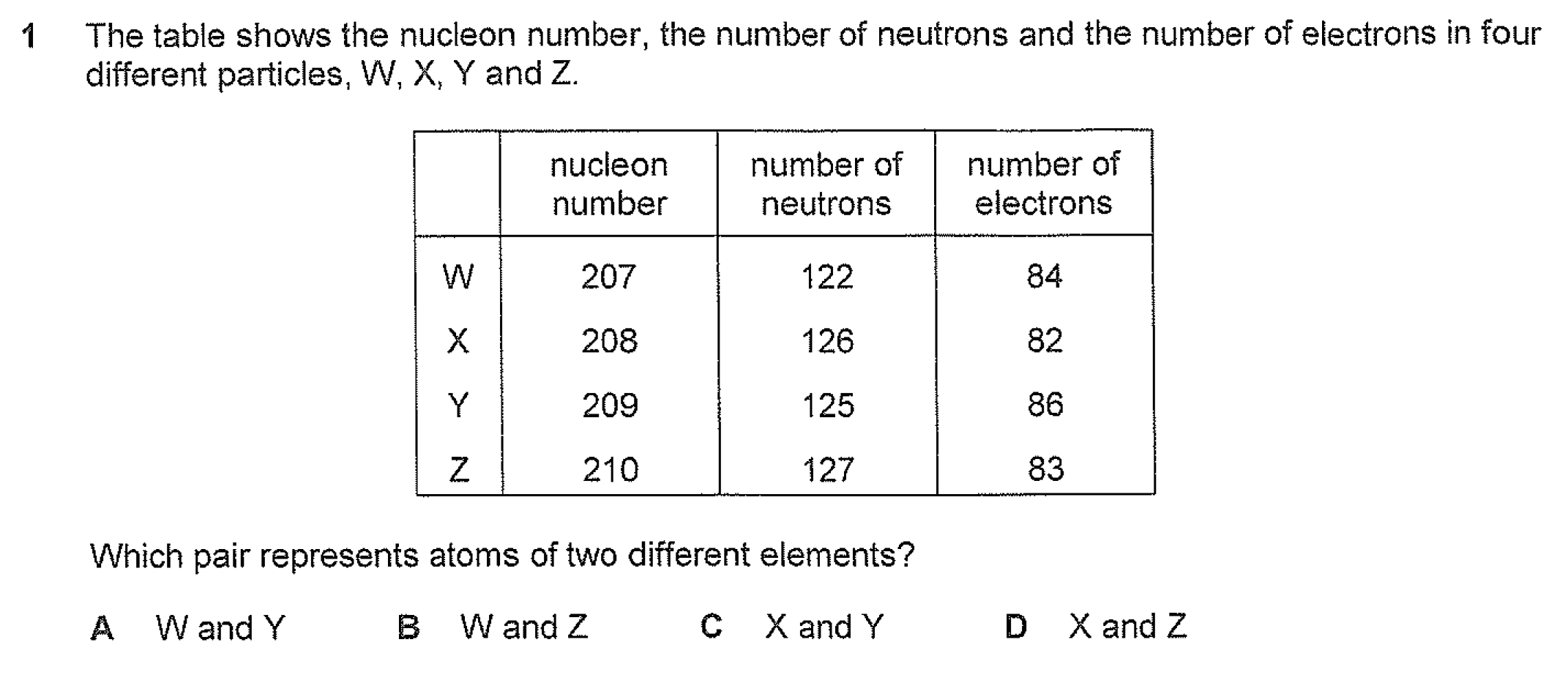
Atoms of two different elements mean the particles have to be neutral (same number of protons and electrons) and the particles must have different number of protons.
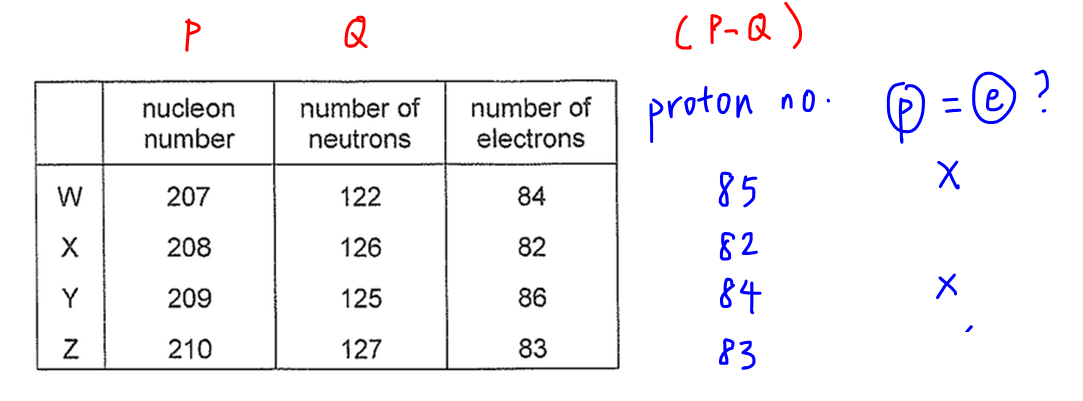
Proton number is determined by subtracting number of neutrons from nucleon number. All 4 particles have different proton numbers hence they are all from different elements. Only X and Z have the same number of protons and electrons hence are atoms.
---
Question 2
Answer: B
Topic: Atomic Structure
Explanation:
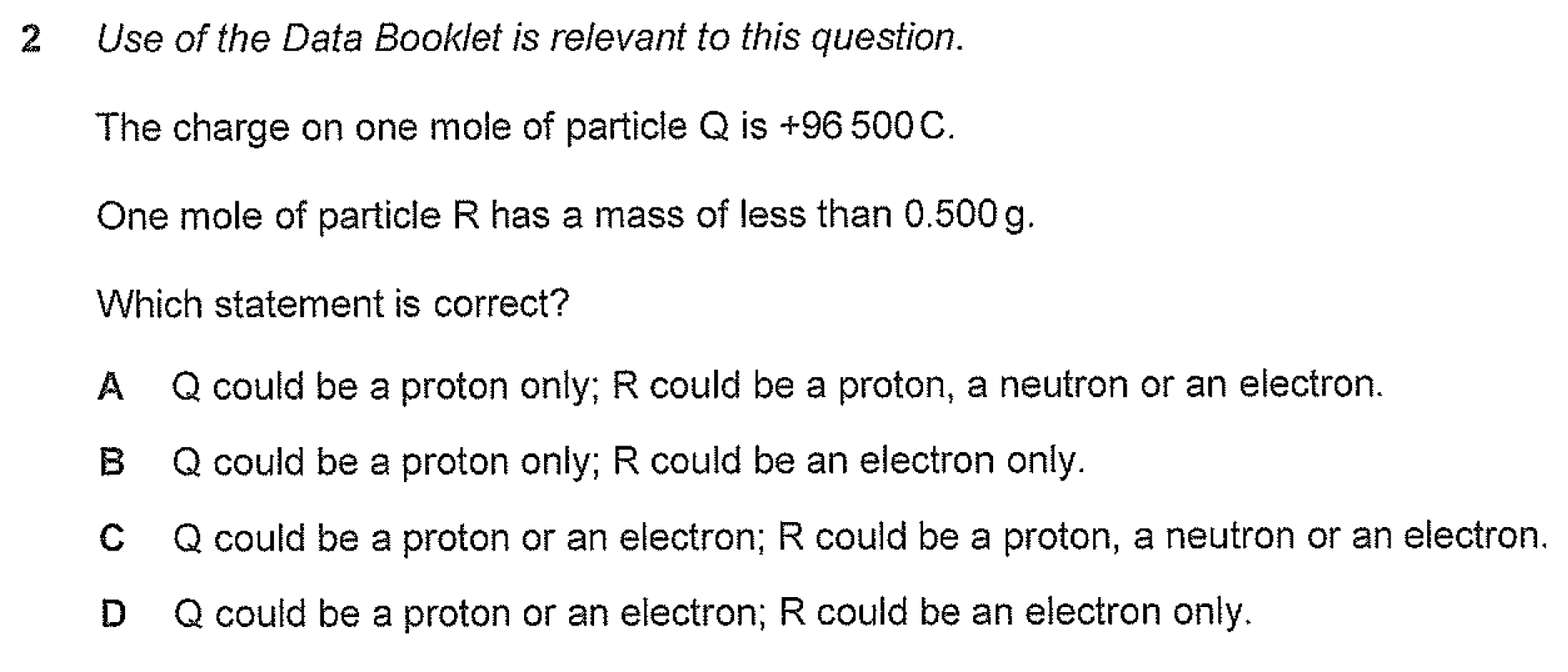
1 mole of protons will correspond to charge of +96500C, 1 mole of electrons will correspond to charge of -96500C while 1 mole of neutrons have zero charge. Hence Q must be a proton.
A proton or neutron has molar mass of 1.0 g mol-1. Since molar mass of R is less than 0.500 g mol-1, it must be less massive than a proton or neutron, hence R must be an electron.
---
Question 3
Answer: D
Topic: Chemical Bonding
Explanation:
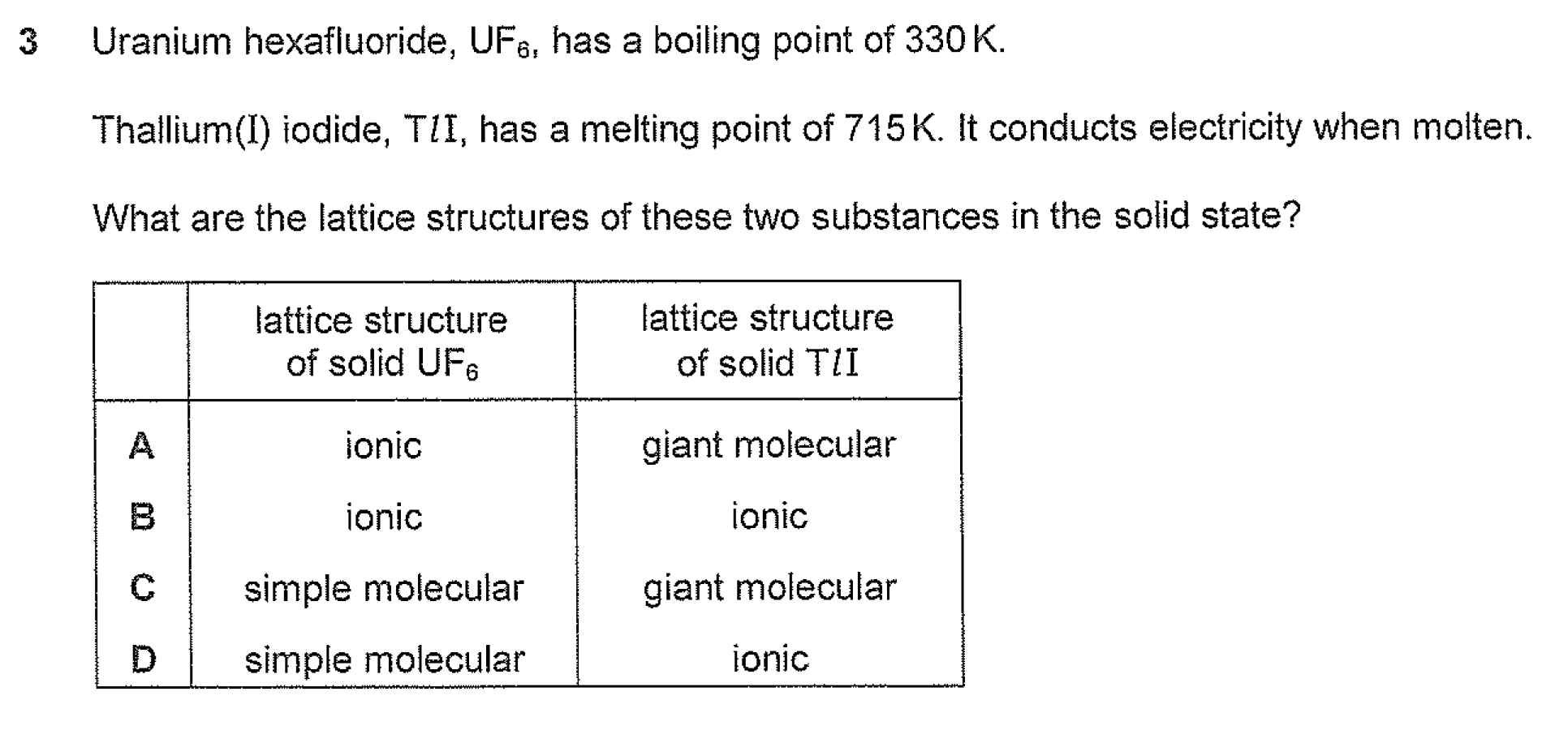
Uranium hexafluoride has a very low boiling point that corresponds to simple molecular structure.
Thallium (I) iodide conducts electricity when molten so it must be an ionic compound.
---
Question 4
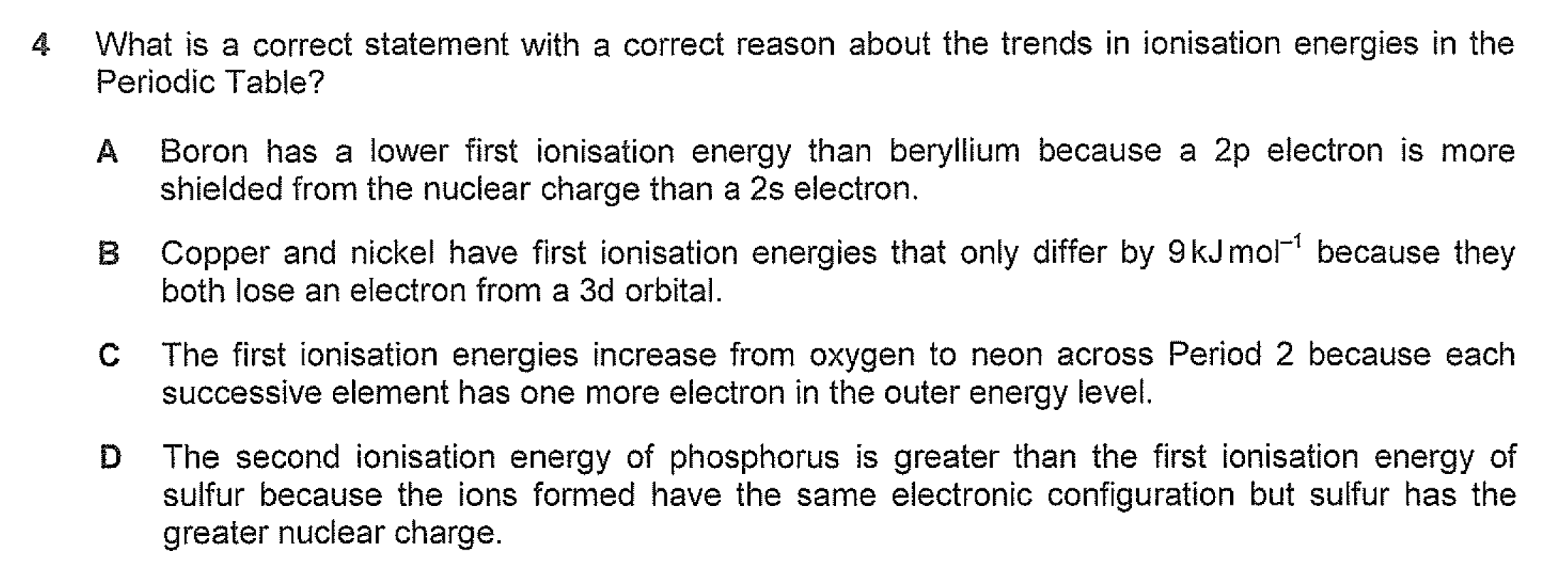
Answer: A
Topic: Atomic Structure
Explanation:
Statement A is true. Removing electron from 2p subshell for boron (1s2 2s2 2p1) requires less energy since 2p subshell is shielded from the nucleus by its 1s and 2s subshell. Removing electron from 2s subshell for beryllium (1s2 2s2) requires more energy since 2s subshell is only shielded by its 1s subshell.
Statement B is false. Similar IE for transition metals in the 3d block is due to their invariant effective nuclear charges. The increase in nuclear charge due to greater proton number is cancelled by the increase in shielding effect when electrons are added to inner 3d subshell that can shield the valence 4s electrons.
Statement C is false. Electron is removed from the same 2p subshell for oxygen (1s2 2s2 2p4), fluorine (1s2 2s2 2p5) and neon (1s2 2s2 2p6). The increase in IE is due to increase in effective nuclear charge caused by increasing proton number and nuclear charge while shielding effect remains the same since electrons are added to the same shell.
Statement D is false. Second IE of phosphorus means electron is removed from P+ cation. The electronic configuration of P+ (1s2 2s2 2p6 3s2 3p2) and S (1s2 2s2 2p6 3s2 3p4) are different hence the ions formed will also have different electronic configuration.
---
Question 5
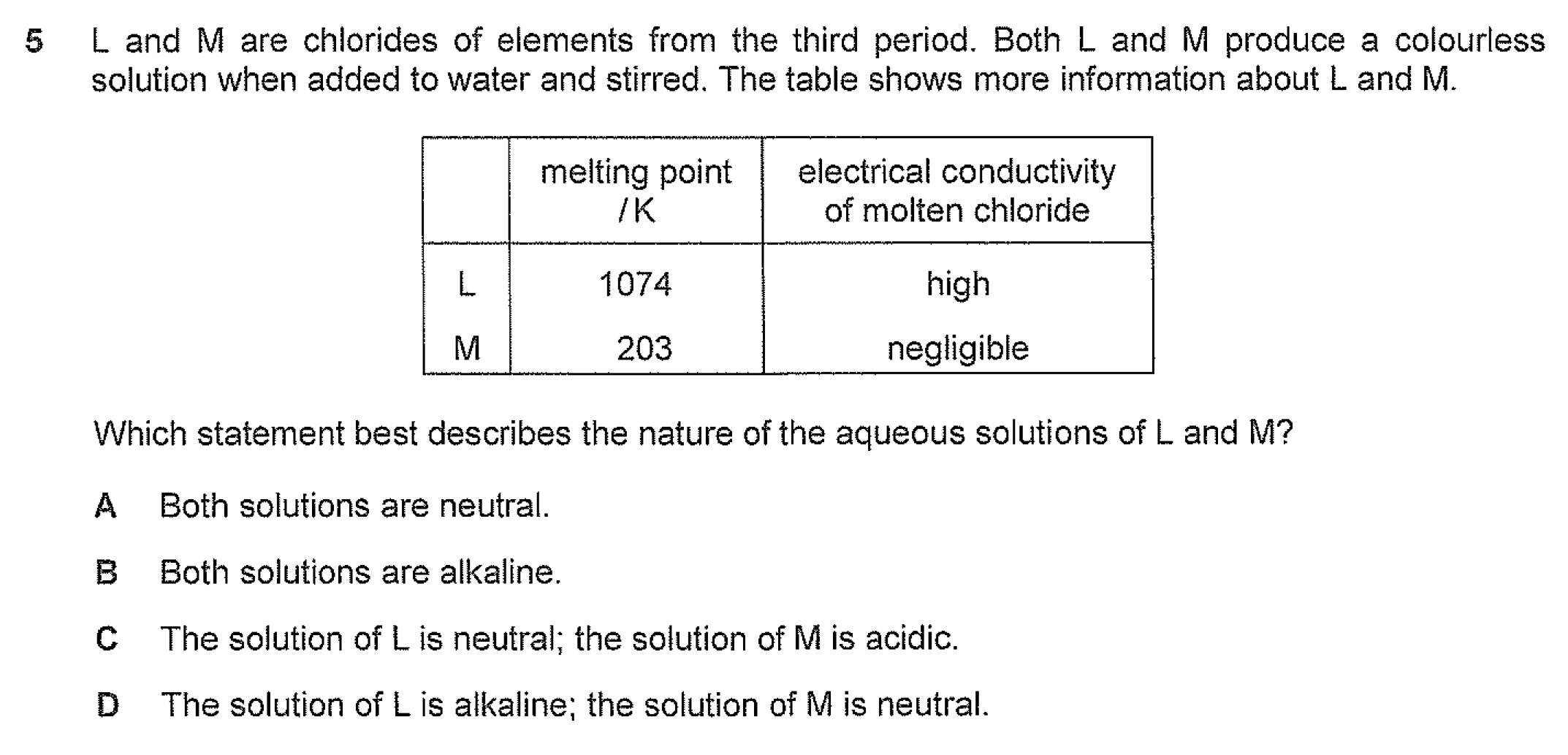
Answer: C
Topic: Periodicity
Explanation:
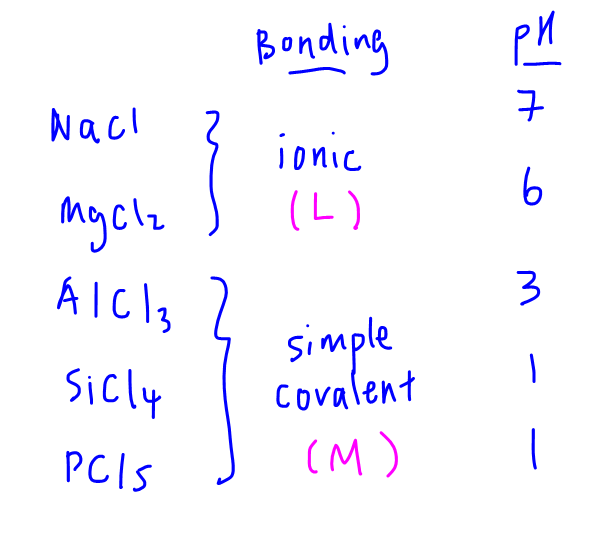
L is an ionic chloride since melting point is high and electrical conductivity of molten chloride is high. L can be NaCl or MgCl2. Aqueous solution of NaCl is neutral while aqueous solution of MgCl2 is slightly acidic (pH 6) and can be considered neutral in this case.
M is a covalent chloride with low melting point and no conductivity when molten hence M could be AlCl3, SiCl4 or PCl5. All these chlorides will form acidic solutions; AlCl3 due to the high polarising power of Al3+ that hydrolyses water to release H+ while SiCl4 and PCl5 hydrolyse in water to form strong acid HCl.
---
Question 6
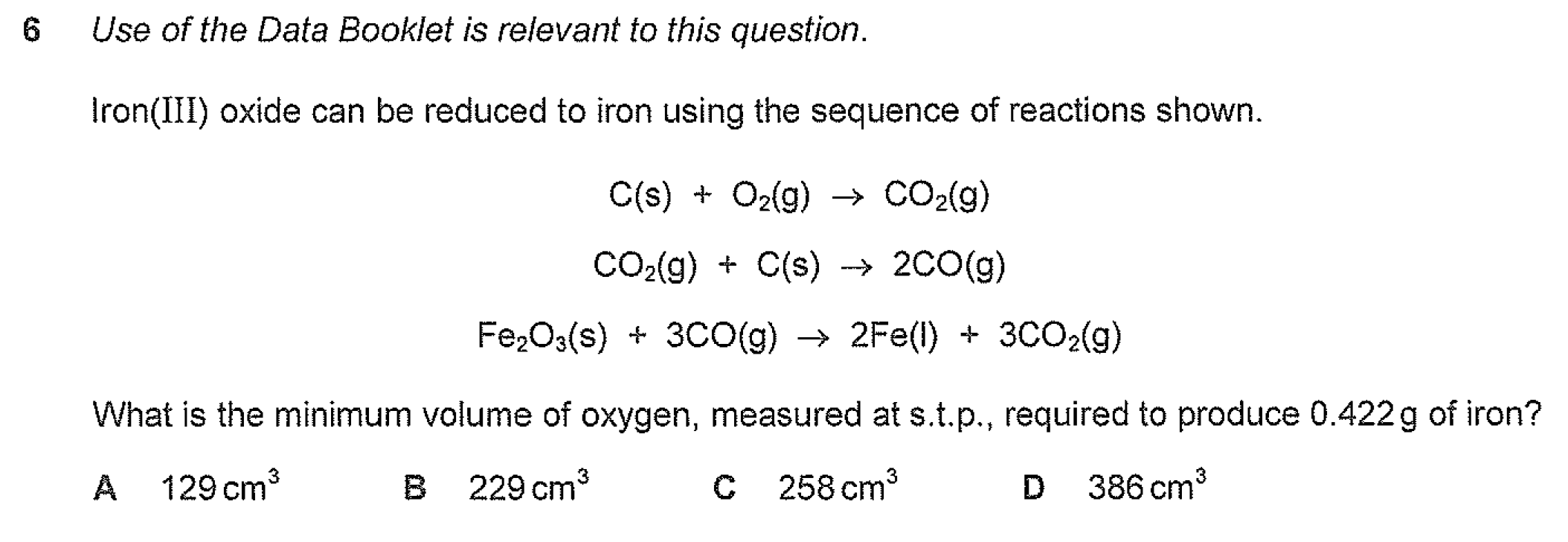
Answer: A
Topic: Mole Concept
Explanation:
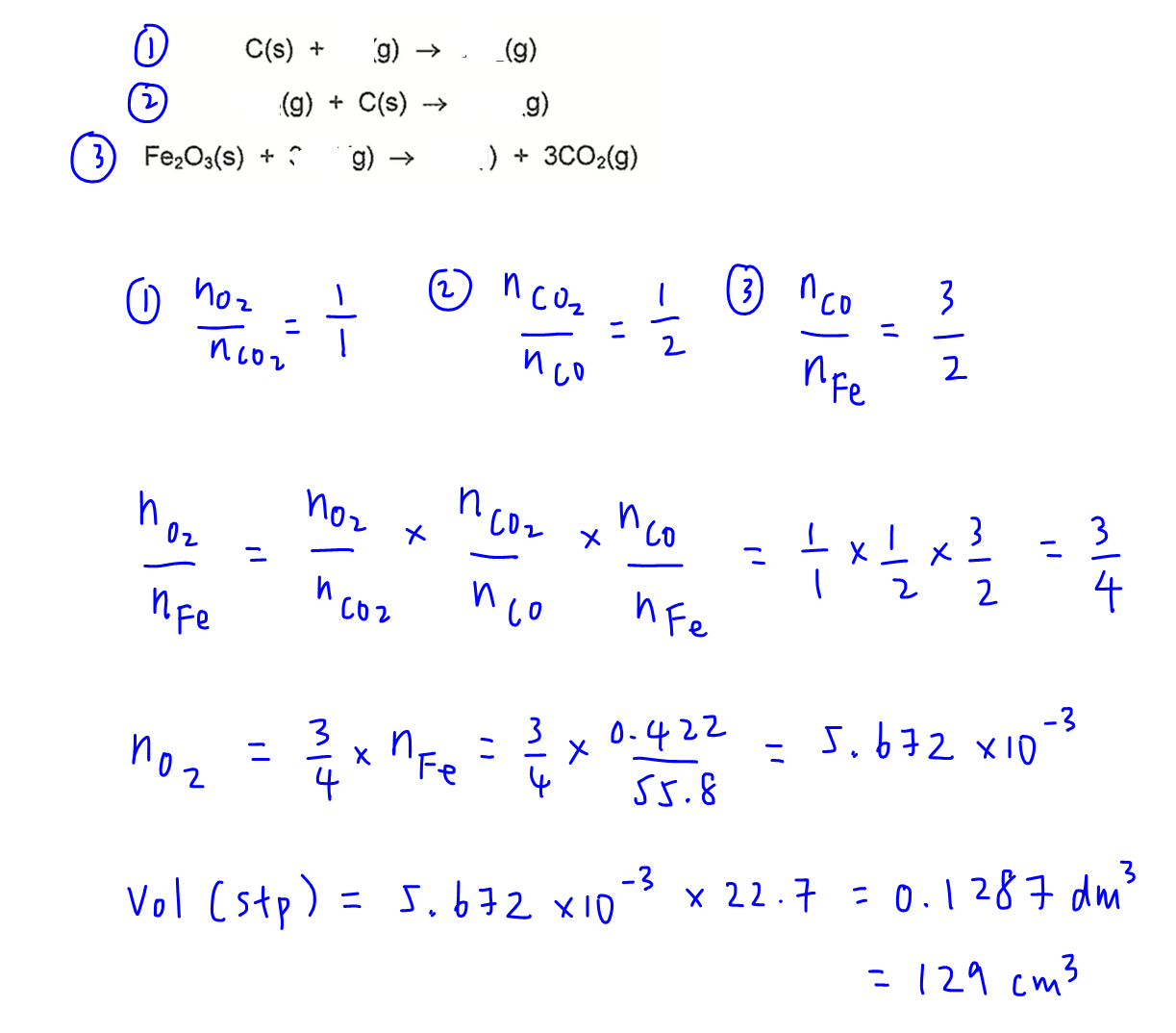
From the sequence of reactions we can figure out mole ratio of O2 to Fe is 3 to 4.
Moles of O2 and therefore its volume at stp can be calculated.
---
Question 7
Answer: A
Topic: Acid Base Equilibria
Explanation:
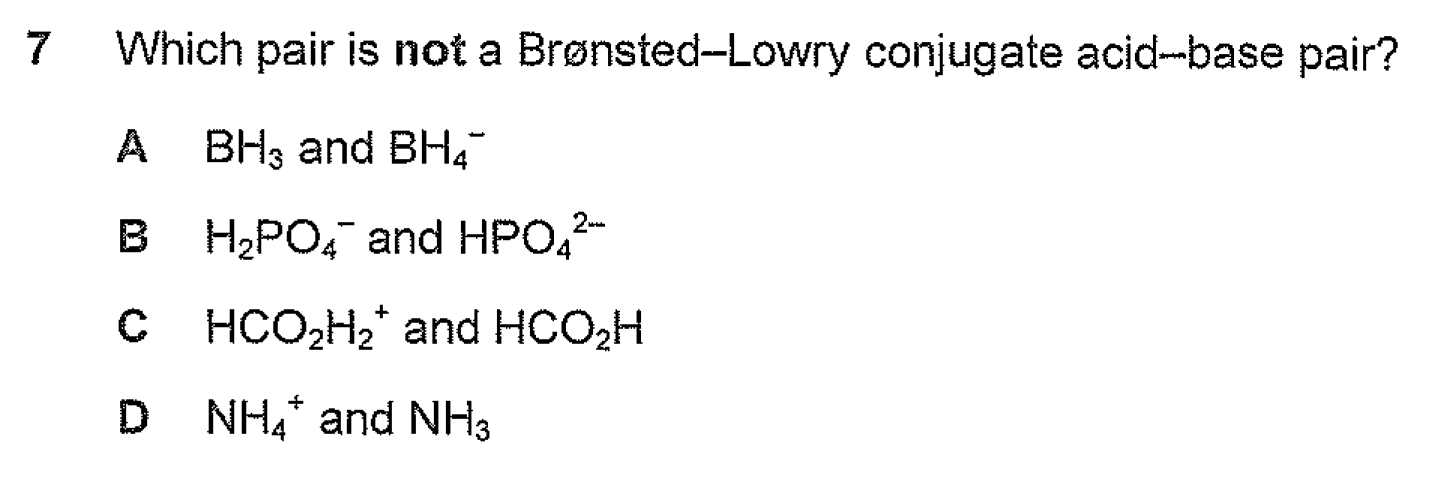
Bronsted acid is a proton donor while bronsted base is a proton acceptor. Hence a conjugate acid-base pair differs by a proton.
BH3 and BH4- is not a conjugate acid-base pair since the difference between them is a hydride H- instead of proton H+.
---
Question 8
Answer: A
Topic: Energetics
Explanation:
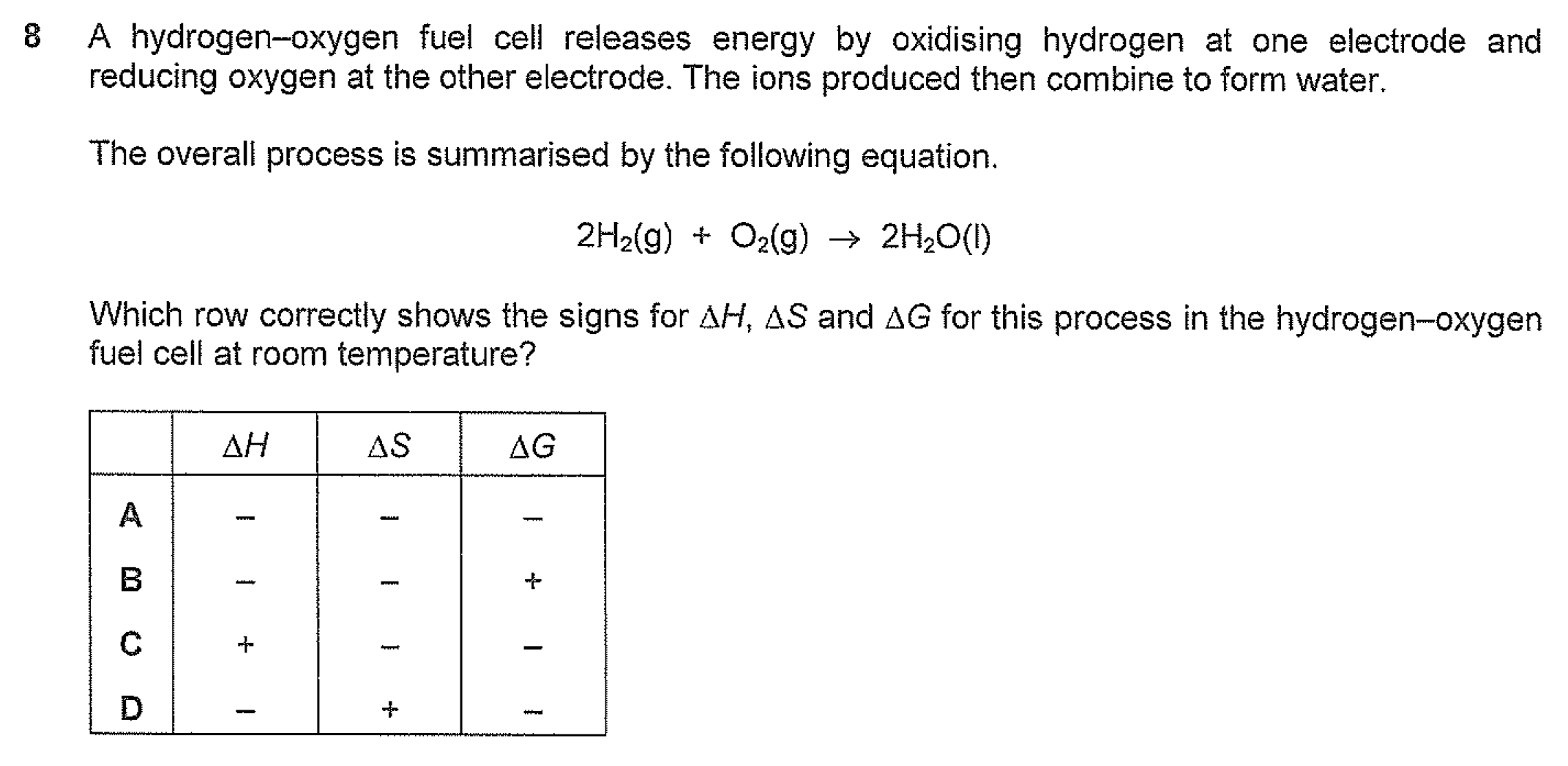
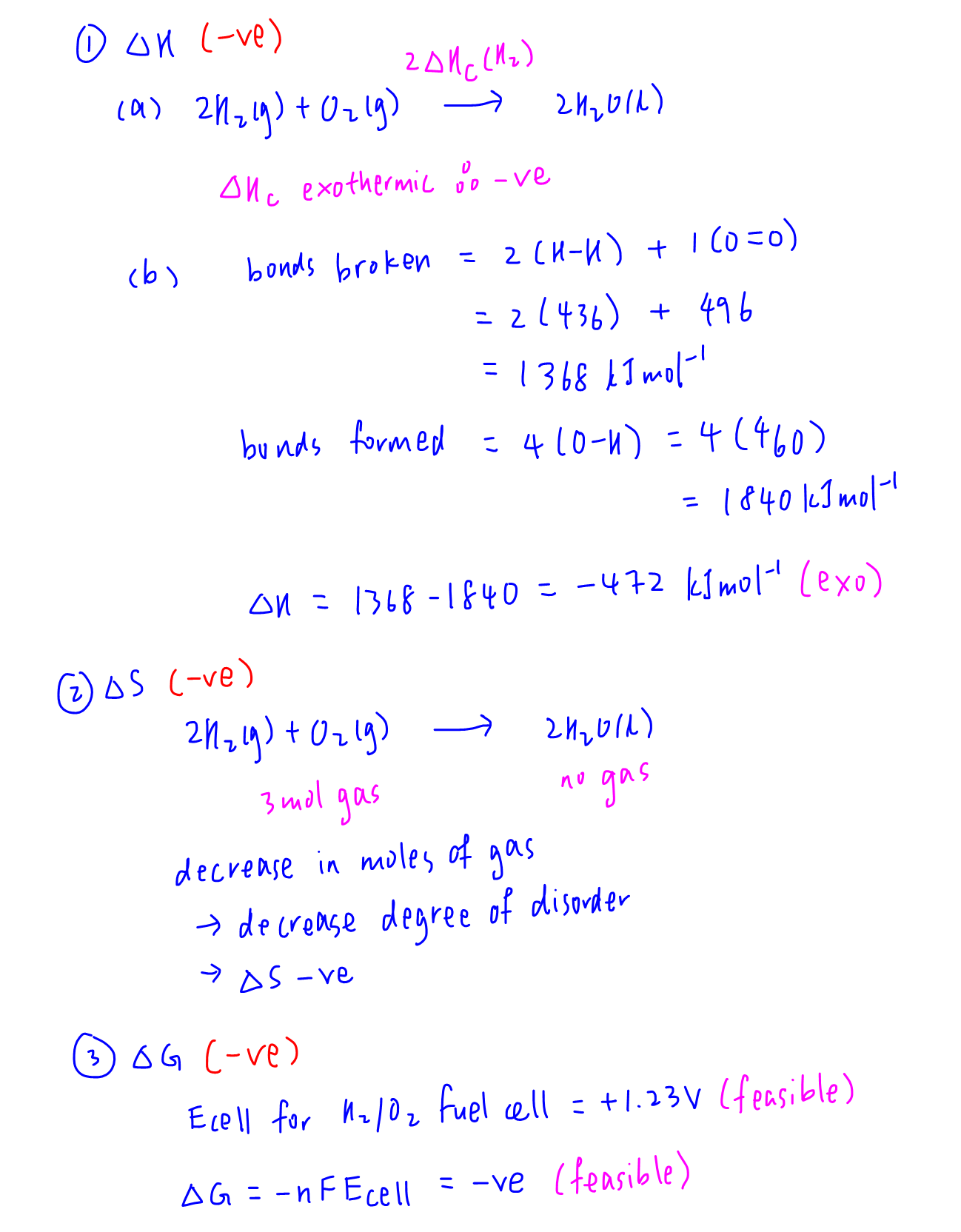
Enthalpy change is negative since the reaction between H2 and O2 can be considered as combustion of hydrogen which is exothermic. We can also calculate the enthalpy change of the reaction using bond energy values from data booklet.
Entropy change is negative since there is decrease in moles of gas in the reaction hence a decrease in degree of disorder.
Gibbs free energy is negative since the Ecell for hydrogen-oxygen fuel cell is +1.23V and the reaction is feasible.
---
Question 9
Answer: C
Topic: Kinetics
Explanation:
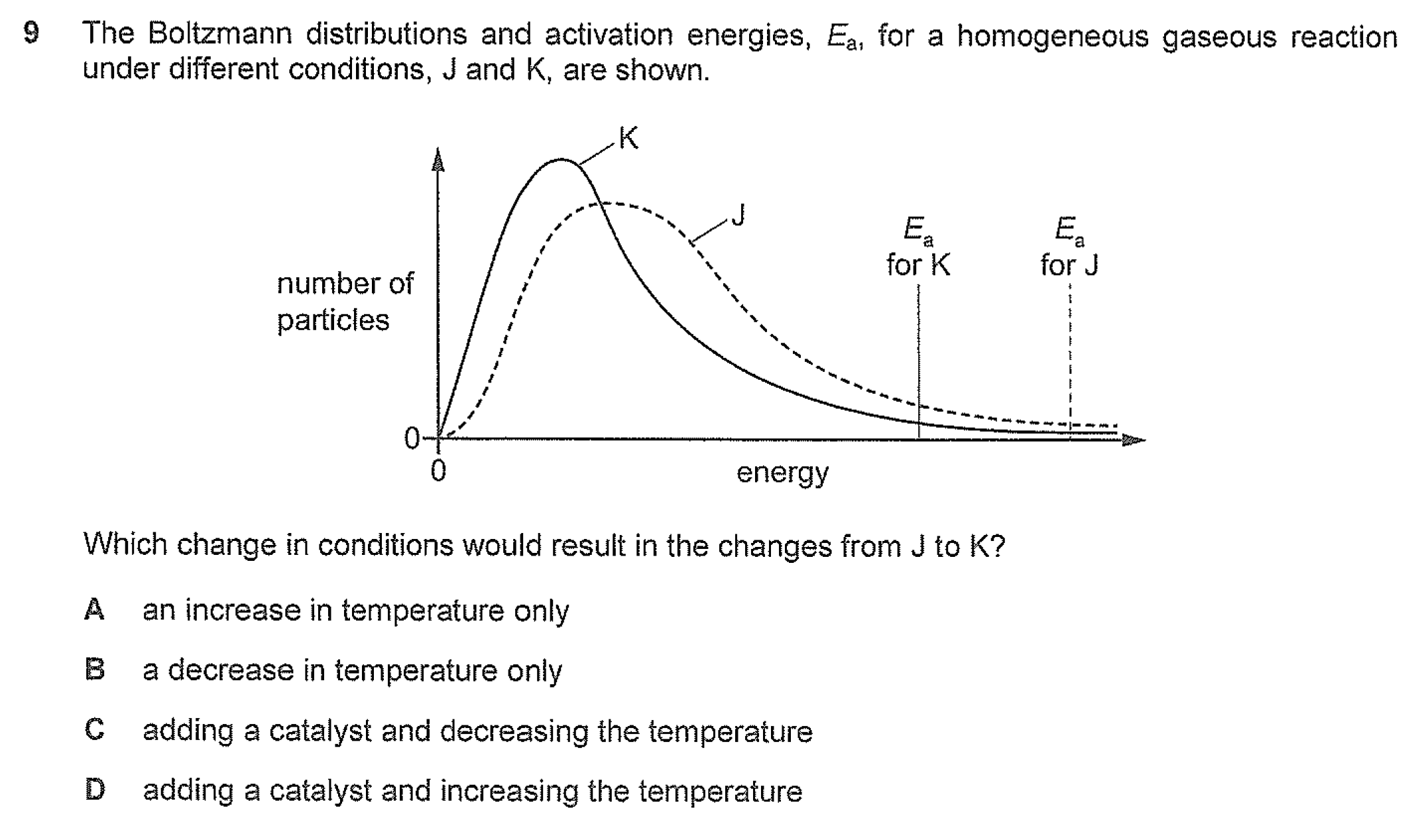
From J to K, activation energy is lower hence a catalyst must be added. The maximum point of the Boltzmann distribution graph also shifts to the left hence the particles have lower kinetic energy and temperature is lower.
---
Question 10
Answer: A
Topic: Chemical Equilibria
Explanation:
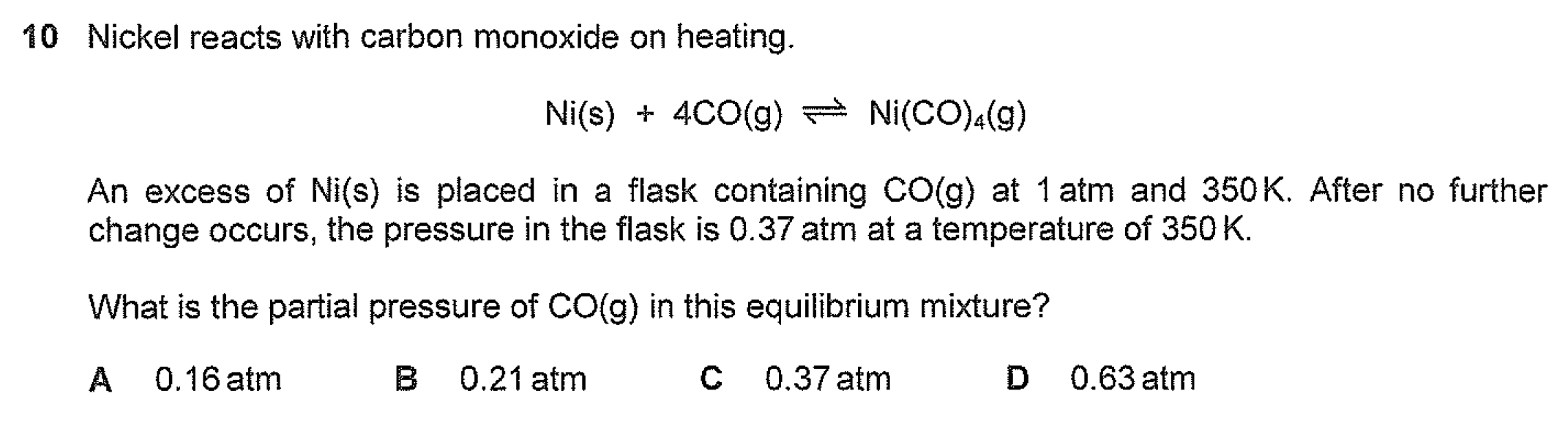
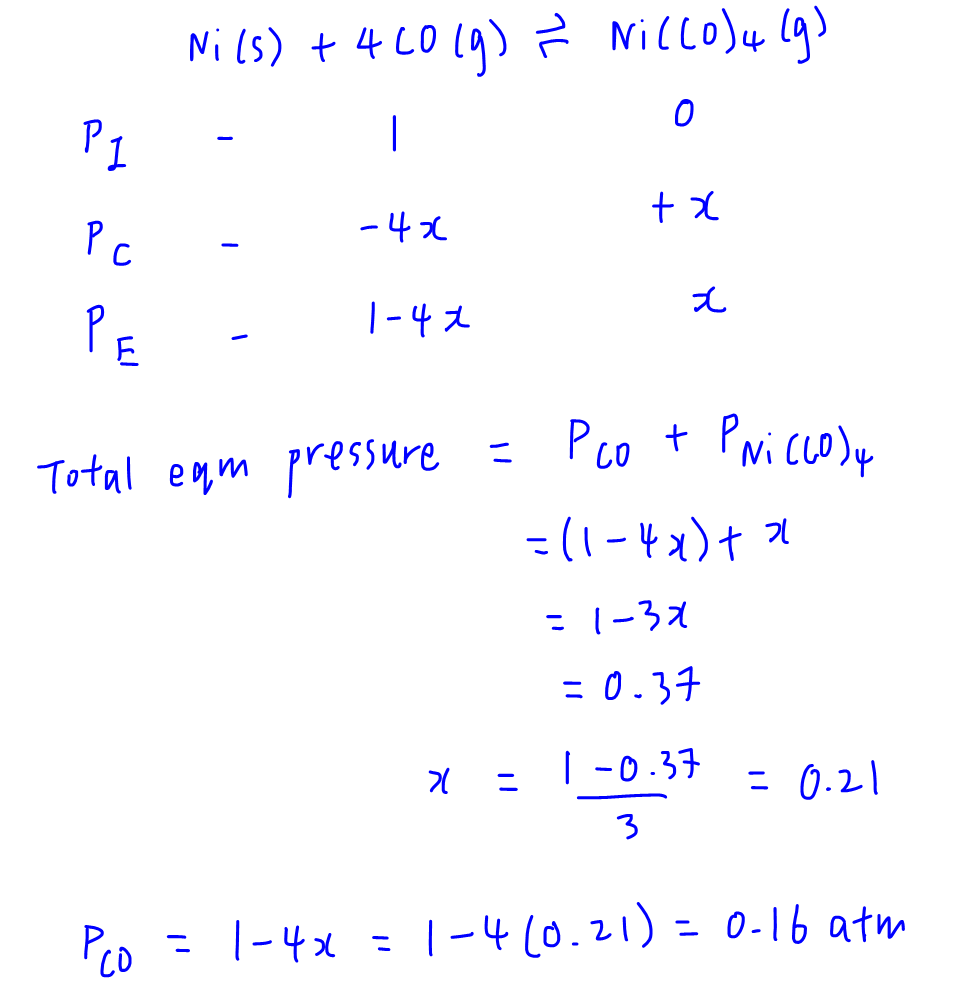
We can fill up the ICE table in terms of an unknown x and determine the equilibrium partial pressures for CO is (1-4x) and Ni(CO)4 is x.
Since the total pressure at equilibrium is 0.37 atm, x can be solved and we can calculate equilibrium partial pressure of CO.
Back to other 2025 A Level Paper 1 Questions
Found this Chemistry video useful?
This free chemistry video lesson is brought to you by Chemistry Guru, Singapore's prestigious JC Chemistry tuition centre since 2010.
Please like this video and share it with your friends!
Join my 19,000 subscribers on my YouTube Channel for new Chemistry videos every week.
Check out other A Level Chemistry Video Lessons here!
Need an experienced tutor to make Chemistry simpler for you?
Do consider signing up for my JC Chemistry Tuition classes at Bishan or on-demand video lessons!
